
The Agave Lab
Deanna Moore of San Diego County, CA increases biodiversity on her agave farm with the help of a Restore grant.
8 acres
•
150 tons CO2e
•
Hedgerow Planting
•
Alley Cropping
•
Windbreak & Shelterbelt Establishment
•
8 acres • 150 tons CO2e • Hedgerow Planting • Alley Cropping • Windbreak & Shelterbelt Establishment •
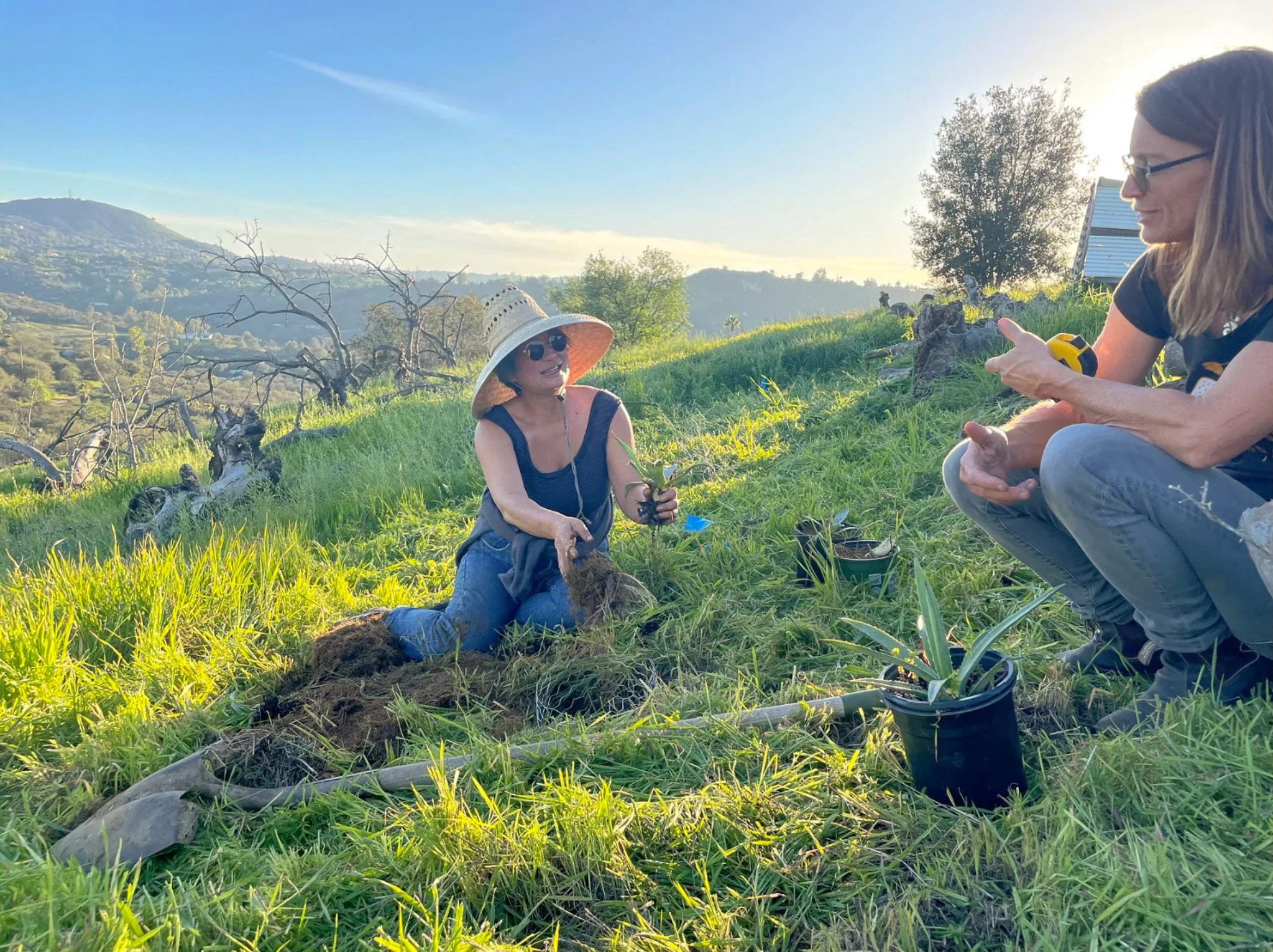
The Agave Lab’s Restore Grant is funded by The California State Coastal Conservancy.
From Avocados to Agave
When Deanna Moore bought a seventeen-acre property full of dead avocado trees in 2014, she knew that she had to completely reshape the land. “We spent several years cutting the [avocado trees] down and putting them out [with] burns and setting them out as firewood,” Deanna remembers.
Purchasing the land was the culmination of Deanna’s education in farming and conservation. “My background is in ecology, so I've done a lot of conservation and I also have a background in permaculture.”
Deanna’s first experiences with farming took her around the world, first with edible landscaping, and from there, to a chocolate company. “I was traveling around to West Africa. I lived in Hawaii and we grew cacao, turmeric, and lots of different fruit tree crops there.”
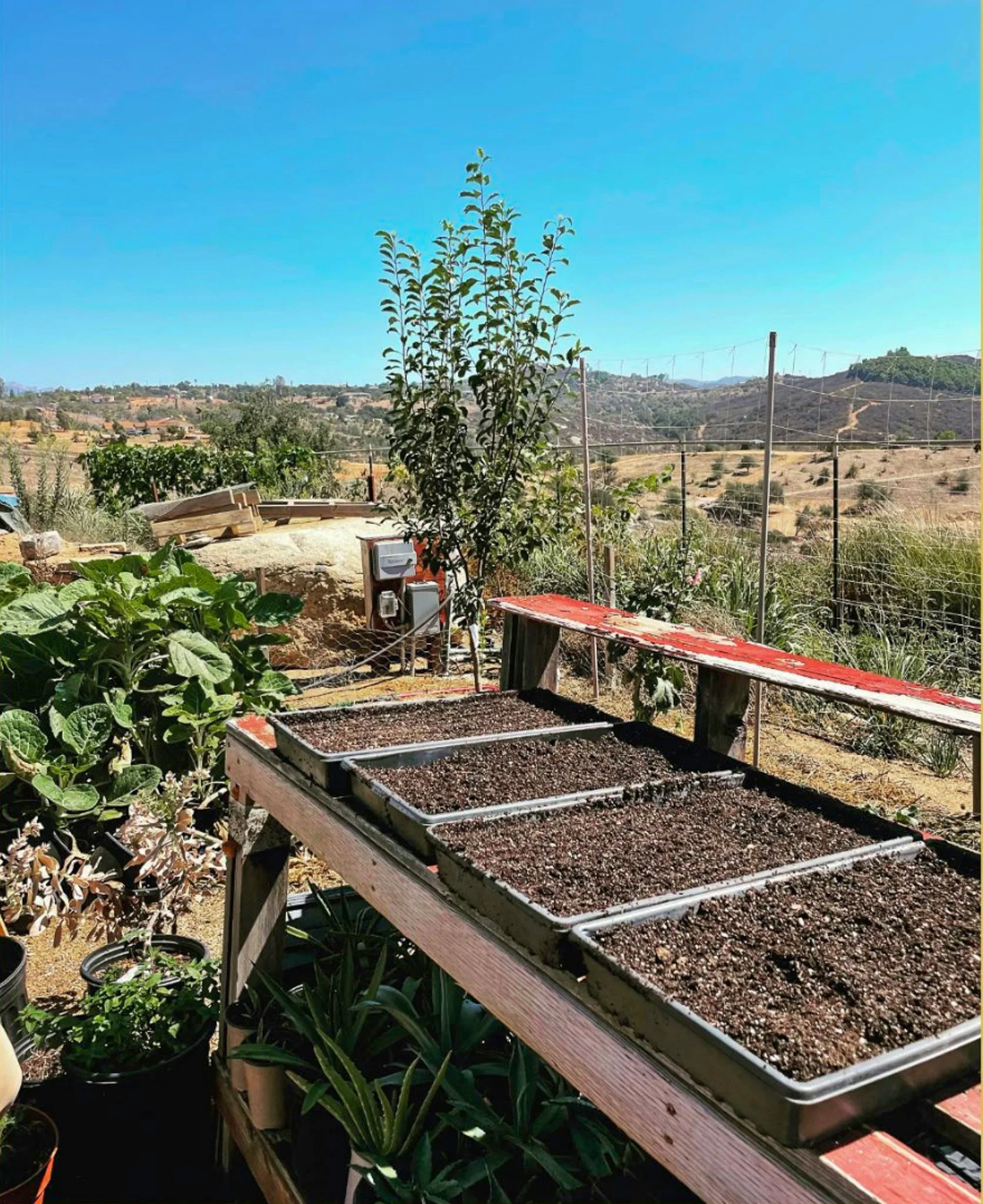
”I planted mesquite as one of the [practices] that was implemented using the grant funds, and we've used that for distilling.”
-Deanna Moore
Discovering Agave
It was in her travels to South America that she first got her inspiration for growing agave. “I've been traveling down to Oaxaca, Mexico for the last ten years, and I'm pretty obsessed with mezcal. Particularly [since I] have a background in the chocolate industry, just seeing the parallels between chocolate and mezcal - this intersection of culture, ecology, tradition.”
She saw parallels between Mexican and Californian landscapes as well. “As you move from the tropical part of Mexico to the deserts, the agave is really woven in there. [I was] learning more and more about California history and ethnobotany…agave was a huge part of the diets of Native Americans, particularly in Southern California. It's truly a drought tolerant crop. It's not just a low water crop.”
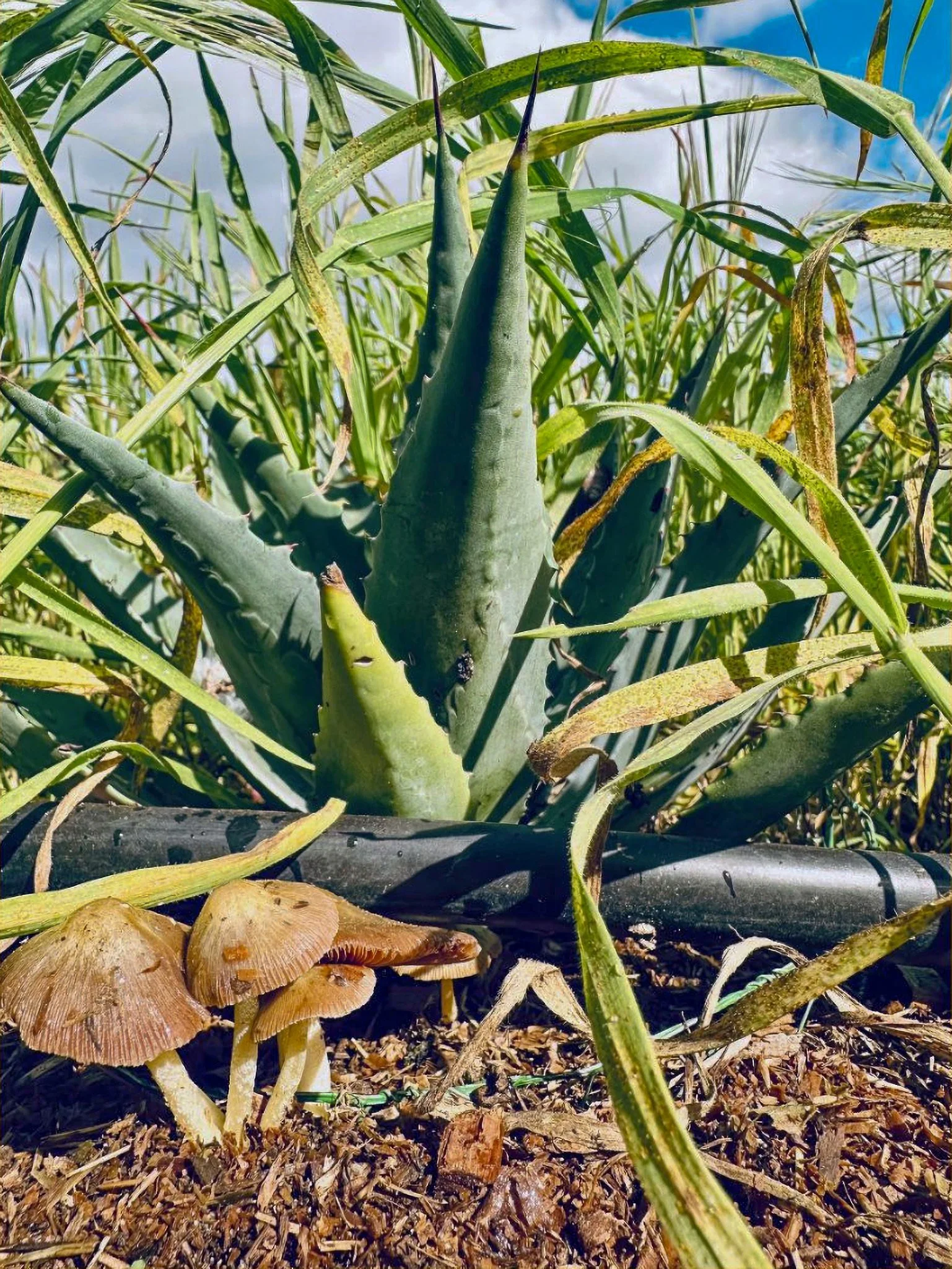
These observations led to planting agave in her newly cleared land a couple of years ago. Deanna has taken a drylands farming model approach. “You know, replicate that type of ecosystem and also build soils. We also live in a heavy wind zone. So [we’re] creating more vegetation in order to build more biodiversity.”
A New Landscape
To accomplish these goals, Deanna and her team are practicing hydro planting, wind break and shelter establishment, and alley cropping with the help of a Zero Foodprint Restore grant. These practices, which help to combat wind erosion while building healthier soil, are providing other benefits to the farm as well.
“One of the hedgerows we're planting is jojoba. That's a native plant to our region, which we can also use for oil pressing. Then I planted mesquite as one of the [practices] that was implemented using the grant funds, and we've used that for distilling. It also can be used for animal fodder, and can be ground up into a flour to use in baked goods,” Deanna explains.
The Agave Lab is also planting native ceanothus, a nitrogen-fixing plant, to boost soil health, and low growing sage for water retention and erosion prevention. “So all the plants we chose for the grant would be performing many functions,” Deanna says.
The changes brought by these practices have already produced noticeably richer soils, while supporting Deanna’s goal of setting an example of biodiversity in the agave growing community. “We're a model for more of a regenerative approach to growing this crop that's going to be up-and-coming a lot more in California.”
About The Agave Lab
The Agave Lab is an agave-centric educational farm project in San Diego County. We grow over 20 species of agave, including native California and Southwestern US varieties that have been traditionally used for food, medicine, fiber, and spirits.
Our mission is to inspire innovation and build community around these ancestral plants through regenerative farming, creative storytelling, unique design, and hands-on experience. We aim to slow down, reconnect, celebrate, and savor the world around us.
-
Zero Foodprint awards grants for projects that take carbon out of the atmosphere and put it back where it belongs: in the earth, creating healthy soil and better food. To do this, we focus on regenerative farming practices like composting, cover cropping, and managed grazing that can restore life to our soil while removing carbon from the atmosphere. Together, we have the power to grow more nutritious food, heal natural water cycles, and create habitat for biodiversity to thrive. Explore previously funded projects to see what this might look like on your farm.
For more information, read through other Restore Grant FAQs.oes here
-
The Coastal Conservancy is a non-regulatory state agency that works with others along the California coast, in coastal watersheds, and in the San Francisco Bay Area to protect and restore coastal resources, to help people get to and enjoy the coast, and to enhance climate resilience.
“Our vision is of a beautiful, restored, and accessible coast for current and future Californians. We act with others to protect and restore, and increase public access to, California’s coast, ocean, coastal watersheds and the San Francisco Bay Area.”
Zero Foodprint (ZFP) is a nonprofit organization restoring the climate, one acre at a time. We believe that by regenerating soil, local food economies can play a critical role in reversing the global climate crisis. We work with food and beverage businesses, philanthropy, and government to bring the next dollar to implement the next regenerative practice on the next acre. This regenerative economy benefits every person who grows food, every person who sells food, and every person on this planet who eats food.
