
Kress Ag Partnership
A fourth-generation farming family uses regenerative practices to grow their farm and thrive in Rockland, Idaho.
2,641 acres
•
875 tons CO2e
•
Windbreak & Shelterbelt Establishment
•
Nutrient Management
•
2,641 acres • 875 tons CO2e • Windbreak & Shelterbelt Establishment • Nutrient Management •
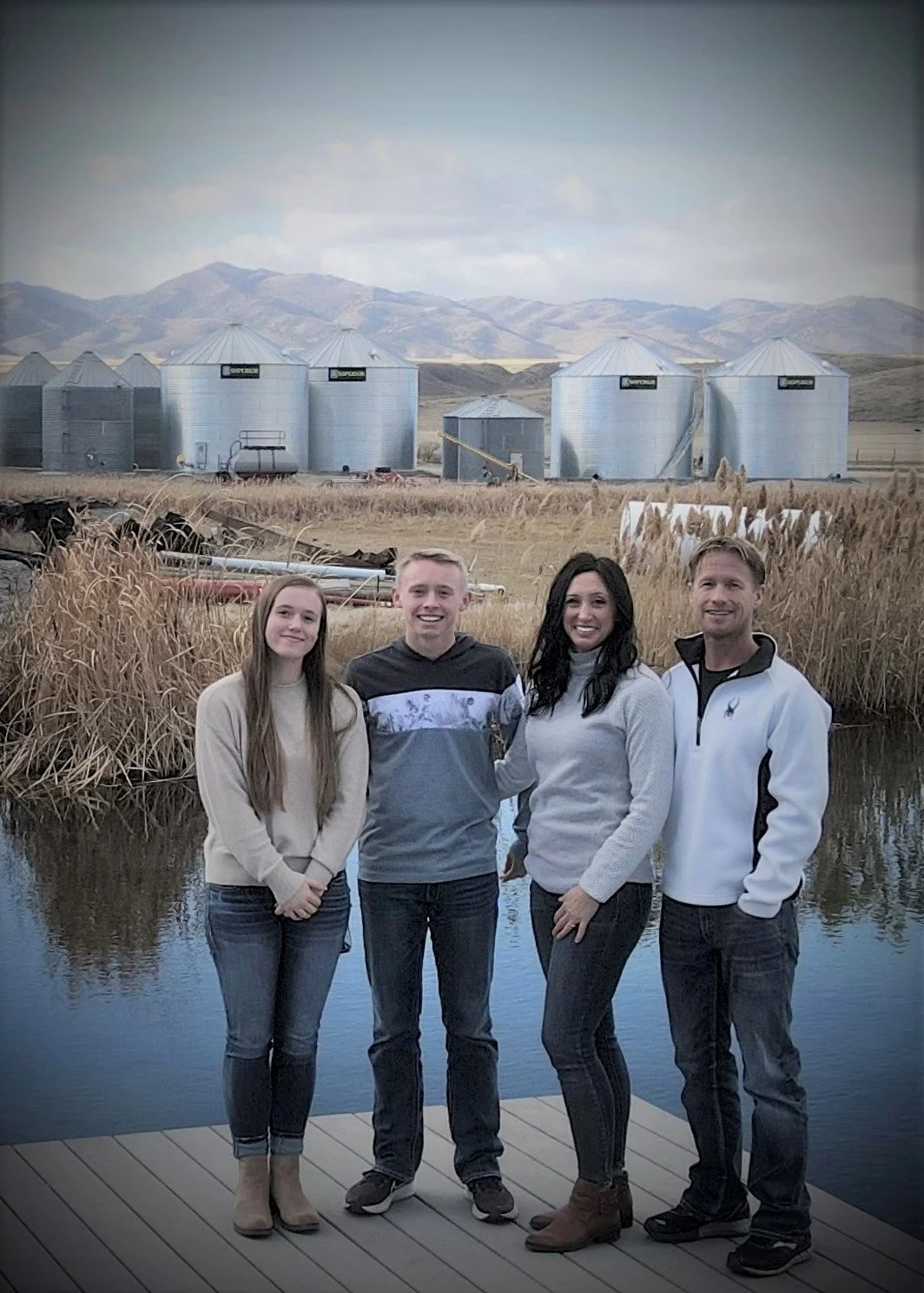
Coming Back to the Farm
Cory Kress’s Idaho farming roots are over a century deep. “My family came over from Germany in 1870…there was still some free ground in the West under the Homestead Act. So my family went from Indiana to Idaho.” There, they found “some cheap, dryland ground up against the mountains in Rockland Valley.” The Kress family has been farming wheat in that valley ever since.
After going to school for engineering, Cory believed he didn’t want to be a farmer. But after three years of working at a large food company, he decided to return to the family business. “I don't know what it is about farming. When you're a kid, you hate it, but once you move away from it, you think, ‘Yeah, that looks pretty good.’”
At 24, Cory and his wife, Jamie, decided to buy farmland of their own. A couple of years later, when Cory’s father passed, the couple took over the Kress family farm as well. They’ve continued to grow and add to the farm since then. This past winter, they were even able to buy farmland that was once part of the original Kress family homestead. “For a farm to survive, it's just the nature of the business we've created. You've got to expand,” says Cory.
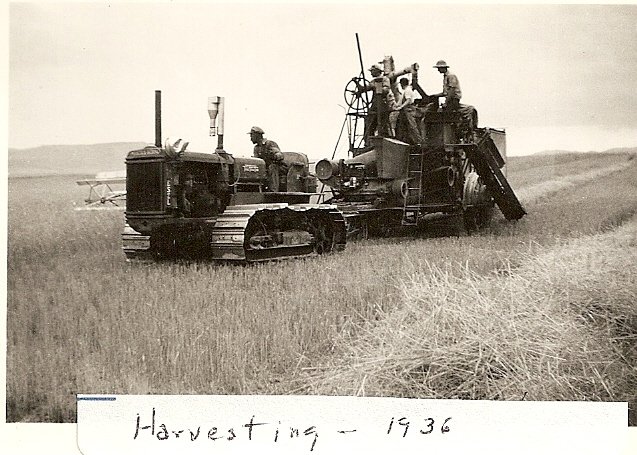
The Kress family homestead in 1936
A New Direction
For the first decade after taking over the farm, Cory and Jamie continued the conventional farming methods that had been used there. Kress Ag Partnership is located in a dry, mountainous landscape with severe climate. Strong storms, arid weather, and heavy wind “take the soil with [them]”, Cory explains.
Cory and Jamie began to realize that the conventional farming methods they were using made this problem far worse. “Conventional fallow is just bare dirt. That powdered-up dirt was terrible. When it rains hard, it all runs off.”
A friend introduced the Kresses to no-till farming, and they noticed that their water was now being absorbed into the soil, rather than sweeping it away. This was the start of an entirely new approach to farming, and it became apparent to the Kresses that they could grow a lot more than wheat. They began planting new kinds of crops on their land, and found that “the best way to grow wheat is to grow other things in between. [To prevent] soil diseases, weeds, insects, and all those things, I found that the more rotations I could do, the better all the crops do,” says Cory.
“I hadn't heard of [Zero Foodprint] before, and I was really skeptical. I'm like, ‘What? There are people who aren't the government who are going to give me money to [farm]? I don't believe it.’”
-Cory Kress, Kress Ag Partnership
Leveling Up
Wanting to continue the transition to regenerative practices, the Kresses found out about Zero Foodprint through one of their wheat buyers, Bob’s Red Mill. “I hadn't heard of [Zero Foodprint] before, and I was really skeptical. I'm like, ‘What? There are people who aren't the government who are going to give me money to [farm]? I don't believe it.’”
Through a Zero Foodprint grant, Bob’s Red Mill was able to fund new, regenerative practices for the Kress family to use on their land. They were able to plant a row of shelterbelt trees to protect their soil from erosion, and begin using a nutrient management system that will allow them to monitor their soil health more closely - a crucial tool for farming in a dry valley with uneven sun exposure. “We're pretty fortunate that we have the technology that we do, so that we can be better stewards of the land,” says Jamie Kress.
Since beginning this regenerative transition, the Kress family has seen incredible improvements in their crop yields. “50% on average,” Cory states. He credits this to both healthier soil and improved wheat varieties. Of their experience as farmers, Jamie explains that, “for us, in agriculture, taking care of this soil is the most important thing we can do for profitability and sustainability…But sustainability in the soil is key for [profitability] to happen. So it's pretty fantastic that [regenerative practices are] good for the environment and good for us.”
-
Zero Foodprint awards grants for projects that take carbon out of the atmosphere and put it back where it belongs: in the earth, creating healthy soil and better food. To do this, we focus on regenerative farming practices like composting, cover cropping, and managed grazing that can restore life to our soil while removing carbon from the atmosphere. Together, we have the power to grow more nutritious food, heal natural water cycles, and create habitat for biodiversity to thrive. Explore previously funded projects to see what this might look like on your farm.
For more information, read through other Restore Grant FAQs.oes here
Zero Foodprint (ZFP) is a nonprofit organization restoring the climate, one acre at a time. We believe that by regenerating soil, local food economies can play a critical role in reversing the global climate crisis. We work with food and beverage businesses, philanthropy, and government to bring the next dollar to implement the next regenerative practice on the next acre. This regenerative economy benefits every person who grows food, every person who sells food, and every person on this planet who eats food.
