
Nelson Grade Organics
A fourth-generation farmer transforms the family business’s approach to growing wheat.
62 acres
•
68 tons CO2e
•
Compost Application
•
62 acres • 68 tons CO2e • Compost Application •
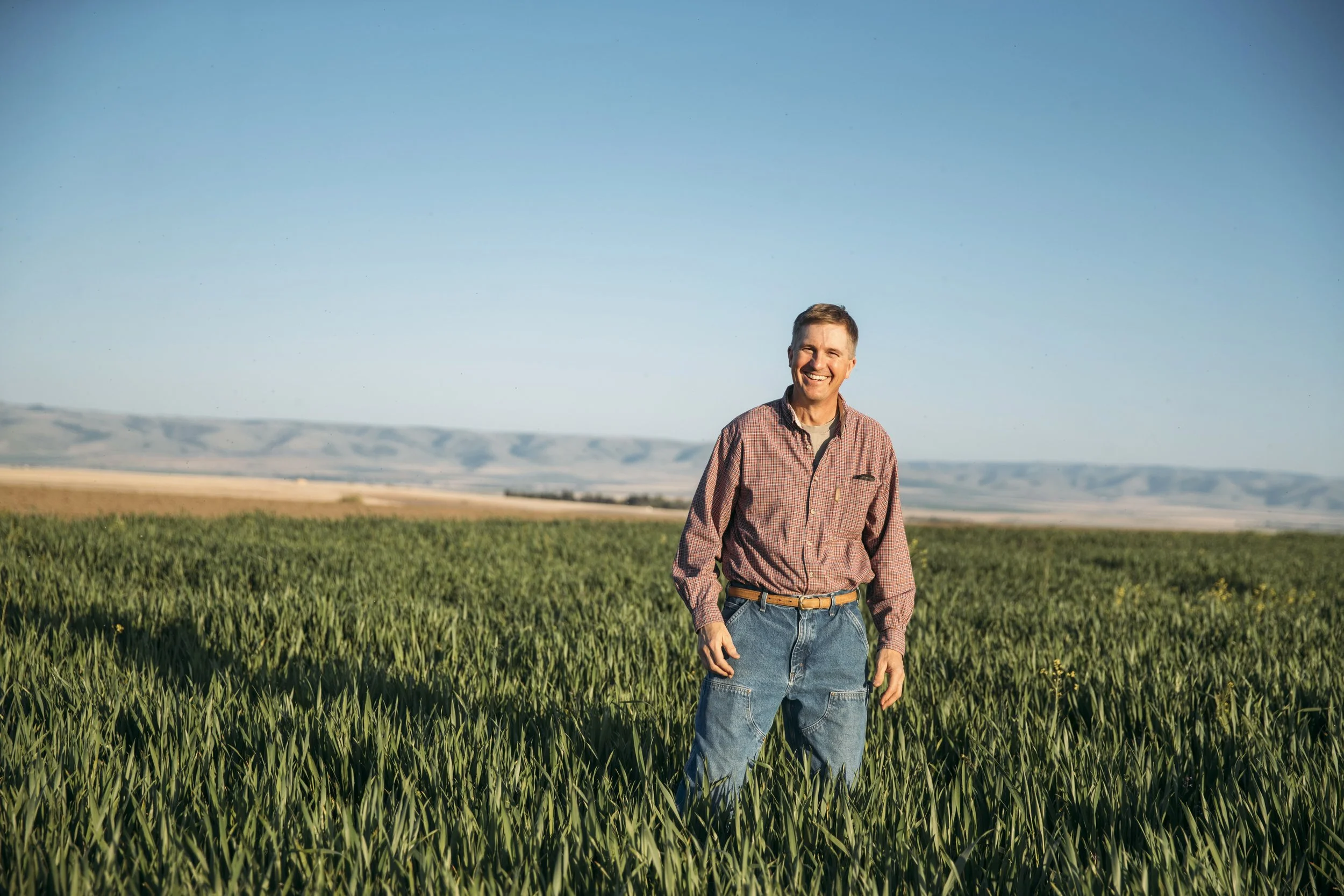
A Return to the Family Farm
A fourth-generation farmer, Eric Nelson came back to the family business just in time for the organic food boom in the late 90’s and early 2000’s. “I had lived in Southern California, in San Diego County, and had access to all the great year-round vegetables and fruits. The passage of the 1990 Organic Act was also around that same time for me.”
Once he was back on his family’s wheat farm in Pendleton, OR, he decided to bring that California approach with him. “I wasn't really a big fan of using pesticides and that kind of stuff, so I was looking for other avenues for how I would farm if I was going to come back to the farm.”
Once he’d made that decision, it took time to build the momentum that it would take to convert his nearly 900 acre farm to organic practices. “It took me ten to fifteen years to get the willpower, strength, and courage to make that change,” Eric admits.
It took a few years more to test Eric’s ideas, and to figure out what needed to be done and how. “I read a lot of articles and publications, and went to conferences… they always talk[ed] about feeding the soil and then the soil feeds the crop,” he remembers.
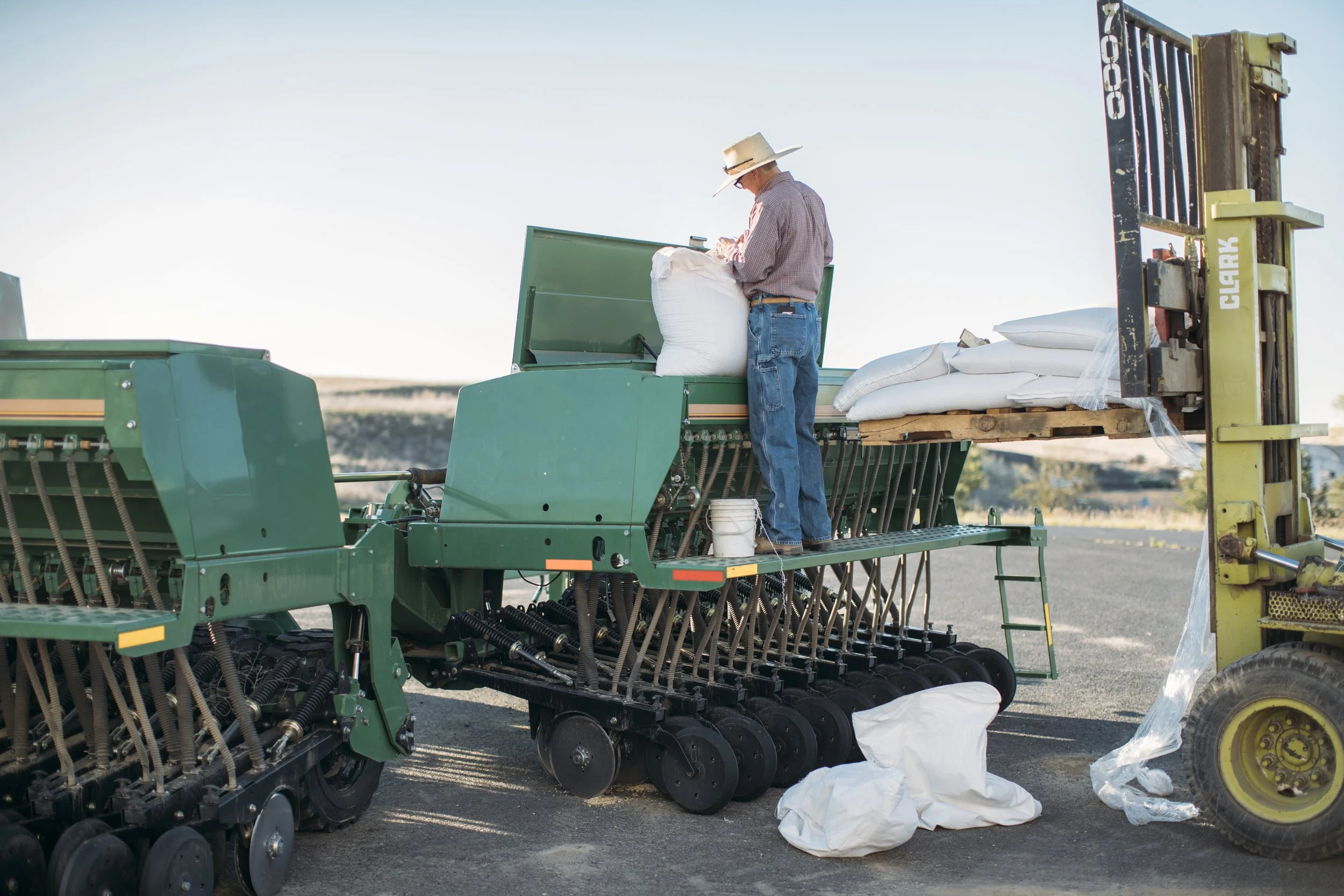
“I hadn't heard of [Zero Foodprint] before, and I was really skeptical. I'm like, ‘What? There are people who aren't the government who are going to give me money to [farm]? I don't believe it.’”
-Cory Kress, Kress Ag Partnership
Support for a New Approach
Today, Eric uses a suite of regenerative practices that do, in fact, feed his soil. “We incorporate cover crops, which is something we never really did conventionally. Organically, we decided we had to grow our own nitrogen and our own fertilizer,” he says.
Of funding these practices, he explains that “the price we receive for organic crops…is higher. It allows us to make some of those choices. We still have to watch our p's and q's, obviously, and cash flow is always a big deal.”
With this in mind, Eric’s relationship with Bob’s Red Mill, one of his customers, ultimately connected him to Zero Foodprint. Through the partnership, Eric was able to receive a Zero Foodprint grant to support his continued use of regenerative practices. As Eric puts it, “It’s a lot about relationship building with that end product. Bob’s Red Mill is one of my customers, and that’s a close circle with Zero Foodprint and the grants.
The grant was Eric’s first, and with it he was able to use higher quality compost on more of his land. Of the future of his farm, Eric says, “I just want to continue what I’m doing to improve the soil, and leave it better for the next generation. Those are important values to me. Leave the place better than I found it, and hopefully I’m doing that.”
Zero Foodprint (ZFP) is a nonprofit organization restoring the climate, one acre at a time. We believe that by regenerating soil, local food economies can play a critical role in reversing the global climate crisis. We work with food and beverage businesses, philanthropy, and government to bring the next dollar to implement the next regenerative practice on the next acre. This regenerative economy benefits every person who grows food, every person who sells food, and every person on this planet who eats food.
