
Our Table Cooperative
A farm-to-table co-op rooted in the belief that food can build community.
15 acres
•
118 tons CO2e
•
Mulching
•
Conservation Cover
•
Compost Application
•
15 acres • 118 tons CO2e • Mulching • Conservation Cover • Compost Application •
An Uphill Battle
Software design and farming rarely share a résumé, but for Narendra Varma of Our Table Cooperative, the transition felt natural. “I had a background in software design, working at Microsoft. Then I transitioned into farming around 2010,” he explains.
The bridge between the two careers was his interest in food systems. “We were looking at a more systemic view of what a contemporary local food system should look like, given all the problems of the larger industrial food system that we have today.”
The major issues that Narendra saw were, to name a few, the aging farmer population, and the fact that in the current factory farming system, “the way that the food spending dollars are distributed [means that] farmers get a very small percentage of it.”
“We feel very strongly that climate is not an individual problem. It’s a communal problem”
A New Breed of Farm
To combat these problems, Narendra and his wife, Machelle, founded a completely new kind of farm in 2010. A cooperative, in which the workers, local food producers, and community members all have part ownership.
“We understood that food culture drives what the food system does. So really, if we're going to change that, then we have to change culture, which means that everybody has to have a seat at the table, not just a bunch of farmers saying ‘buy my carrots because they're better than the other guy’s carrots.’”
Sticking to Their Values
The Varmas founded the cooperative with environmental motivations as well. “One of the things that we value a great deal is land stewardship. We’re very concerned about climate and its impact on us.”
That environmental impact took the form of massive wildfires in 2020, and a heat dome the following year. They had been testing no-till methods, but after these climate blows, “we realized at that point that we really needed to do something more drastic.
To start with, that meant going 100% no-till. “Which meant taking a little bit of a hit on the bottom line for the first few years while we made the transition,” Narendra remembers.
“It's a learning process, there's a lot of new things,” he explains. One of those things was figuring out how to work with their particular climate. There were certain practices they couldn’t do. They found that practices like compost application and mulching with wood chips were “a really critical kind of thing. And that's exactly what we applied for in our Zero Foodprint grant.”
Narendra applied for the grant because “we're constantly trying to tinker and improve yields and fix problems. And these funds allow us to do some of those things that scale.”
Looking Ahead
Narendra’s goal for the farm is to be continuously self-sufficient, so that he can focus on turning it into a community-building tool. On how the grant will play into this, he says that “ having the [financial] breathing room then allows you to deliver on some of those things.”
Narendra hopes that the farm will one day become a hub for collective climate action. “We feel very strongly that climate is not an individual problem. It's a communal problem,” he explains. He hopes to “give people a way to gather and form bonds - talk to each other. That leads to the next step for collective solution-making.”
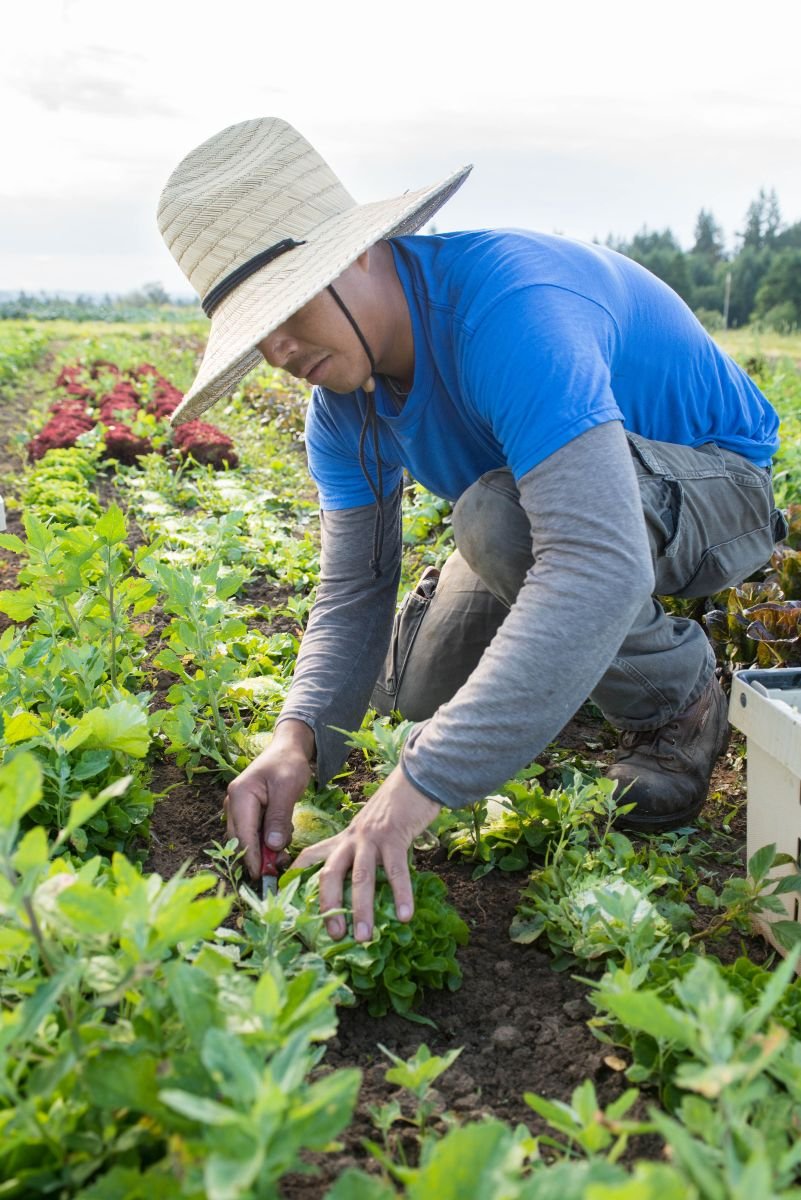
About Our Table Cooperative
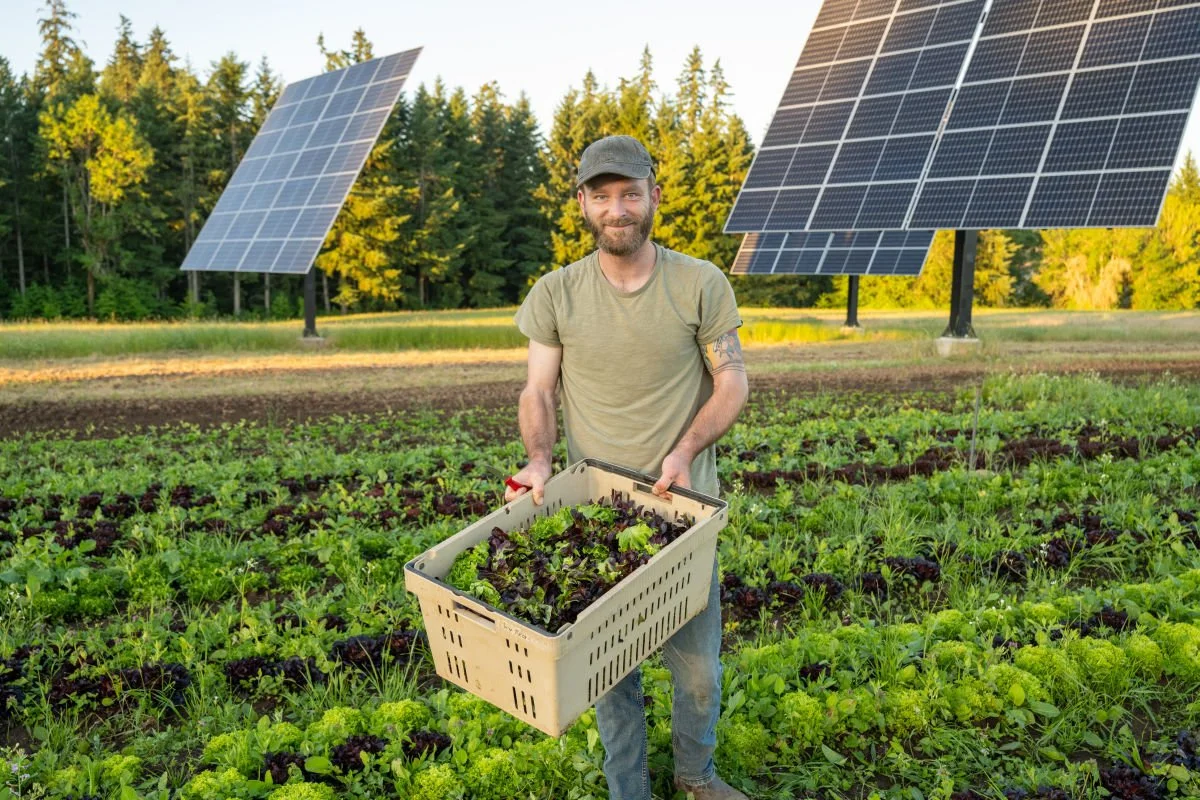
Our Table Cooperative farms on 58 acres of land located about 15 miles south of Portland. We raise a variety of crops, including vegetables, blueberries, strawberries, apples, and pastured chickens and eggs. A year-round creek called Rock Creek flows through the property. A large pond, water rights for irrigation, varying topography, a lovely view of Mount Hood, and wonderful neighbors make this a truly spectacular location.
Our farm is Certified Organic under the USDA's National Organic Program (NOP). This includes all our plant-based crops, as well as our chickens and eggs. Since we took over the property in 2011, no artificial chemicals of any sort have been applied and we have been busily restoring the soil using Biodynamic practices. Long term, it is our goal to work towards Biodynamic Certification, which is a far more stringent and holistic standard.
-
Zero Foodprint awards grants for projects that take carbon out of the atmosphere and put it back where it belongs: in the earth, creating healthy soil and better food. To do this, we focus on regenerative farming practices like composting, cover cropping, and managed grazing that can restore life to our soil while removing carbon from the atmosphere. Together, we have the power to grow more nutritious food, heal natural water cycles, and create habitat for biodiversity to thrive. Explore previously funded projects to see what this might look like on your farm.
For more information, read through other Restore Grant FAQs.oes here
Zero Foodprint (ZFP) is a nonprofit organization restoring the climate, one acre at a time. We believe that by regenerating soil, local food economies can play a critical role in reversing the global climate crisis. We work with food and beverage businesses, philanthropy, and government to bring the next dollar to implement the next regenerative practice on the next acre. This regenerative economy benefits every person who grows food, every person who sells food, and every person on this planet who eats food.
